
← Back to Research & Discovery
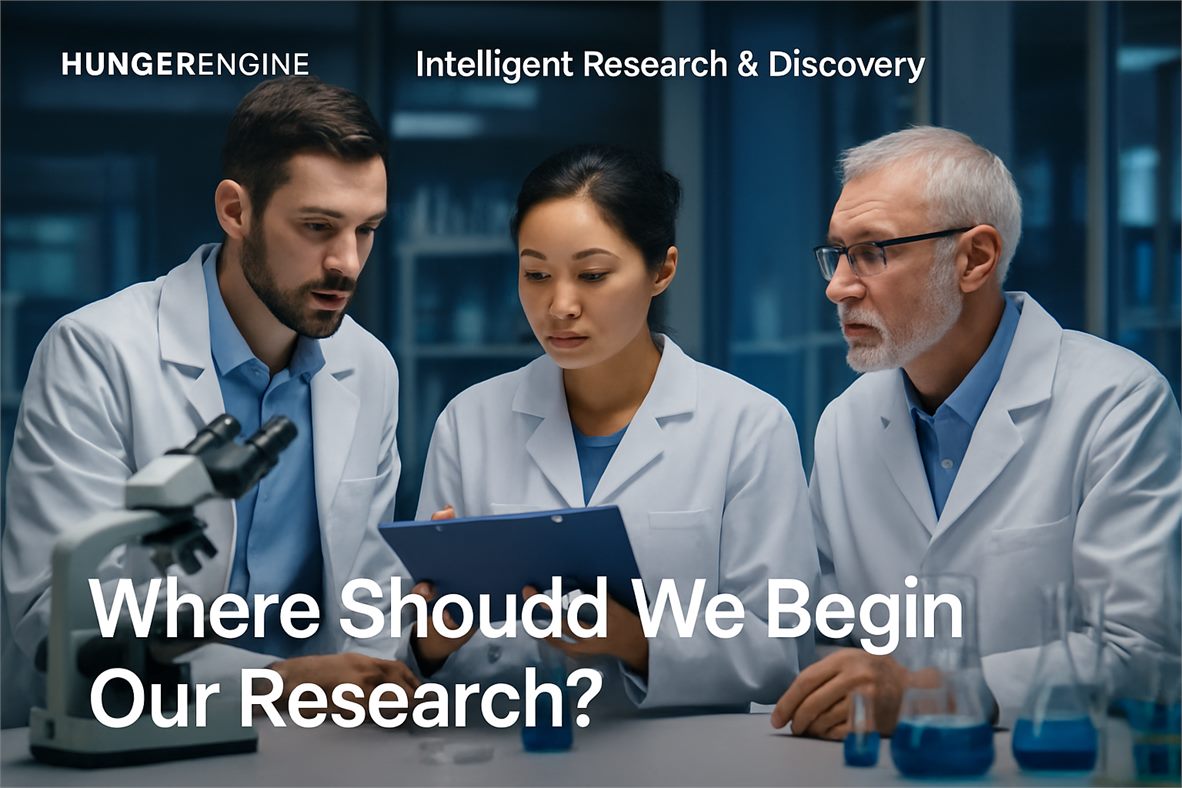
Where Should We Begin Our Research?
Step-by-step guidance to frame research questions, map stakeholders, scan literature, and choose an initial hypothesis—useful for teams, labs, and practitioners.
Where Should We Begin Our Research?
This practical, staged guide helps you turn curiosity into a clear, feasible research scope: identify the right problem, align stakeholders, scan what’s already known, and select an initial hypothesis you can realistically test.
What you'll understand and accomplish
You will learn how to: frame a problem so it’s answerable and impactful; map who matters and what constraints exist; perform a focused literature and evidence scan; choose an initial hypothesis or research question that matches your time and resources; and create simple criteria to decide when to proceed to experiment design.
Who benefits
This resource is useful for individual investigators, small lab teams, startup product teams, operations managers, clinicians planning pilots, nonprofit program leads, and skilled tradespeople exploring process improvements. For example: a materials lab narrowing a screening assay, a restaurant manager testing a new menu item, a manufacturer deciding which defect to target first, or an educator designing an applied classroom study.
Practical stages — a suggested approach
Work in short, structured steps you can repeat and refine:
- Curiosity & observation: note anomalies, customer pain, or inefficiencies in one sentence.
- Problem framing: write a one-sentence problem statement and an impact statement (who benefits and how).
- Stakeholder & constraints mapping: list key users, decision-makers, data sources, time and budget limits.
- Rapid evidence scan: spend a focused hour to find existing studies, internal reports, or comparable solutions; capture 3 things you learned and 2 open questions.
- Hypothesis selection & scope: choose one testable hypothesis, define success criteria, and set a small, timeboxed first step.
Common pitfalls and how to avoid them
Avoid starting experiments without context, chasing only fashionable topics, or fragmenting effort across dozens of tiny questions. These lead to wasted time and inconclusive results. Mitigations include timeboxing the discovery phase, using simple decision rules (e.g., potential impact × feasibility), and consolidating related questions under a single scoped inquiry.
How this fits in Intelligent Research & Discovery
Beginning well is the foundation for better experimental design, reproducibility, and organizational learning. Use this approach to feed clearer hypotheses into experiment planning, data collection, and knowledge capture. Natural next topics include hypothesis development, designing experiments that test feasibility, organizing what you learn, and building a repeating review rhythm so early findings shape later work.
Make useful resources part of something bigger.
The Hunger Engine is moving toward living domains, toolkits, and collections that people and organizations can explore, acquire, tailor, extend, and improve. A useful resource can become part of a personal collection, team toolbox, site-specific domain, or shared enterprise capability.
Start with what you're hungry to improve. As your needs grow, collections can bring together knowledge, audits, forms, dashboards, data, AI, integrations, and other capabilities without requiring you to start from scratch.