
← Back to Operational Excellence Hub
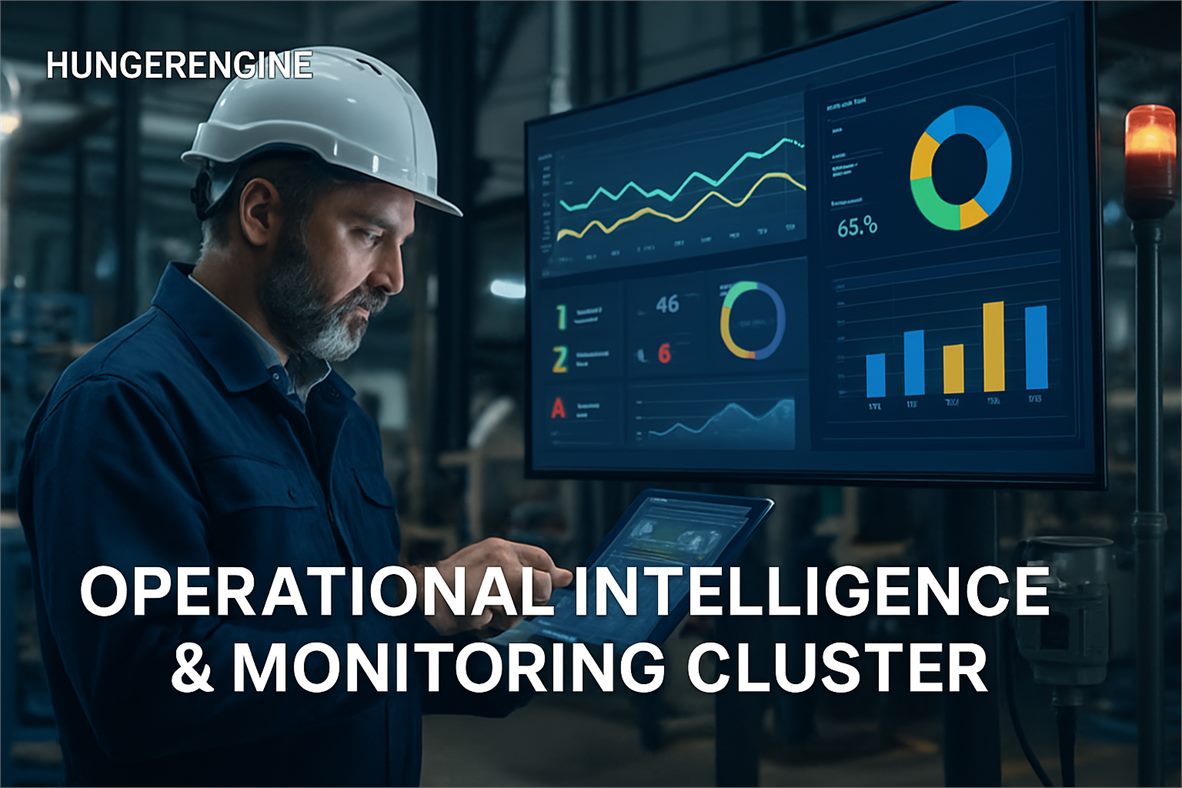
Operational Intelligence & Monitoring Cluster
Patterns, standards, and practical guides for SCADA/IIoT, BI, and real-time monitoring to build trusted dashboards and meaningful alerts for operations teams.
Operational Intelligence & Monitoring Cluster
Build dashboards and alerting that your people trust — so operations teams can see what matters, respond faster, and make better decisions without noise or confusion.
What you'll understand and be able to do
This cluster helps you move from noisy, mistrusted monitoring to clear, actionable operational intelligence. You will learn how to:
- Define the right KPIs and signals for different roles (operator, supervisor, engineer, manager).
- Design dashboard patterns that support fast, correct decisions at the point of work and at higher levels of the organization.
- Create alerting practices that reduce false positives, link alarms to response procedures, and surface true exceptions.
- Integrate SCADA/IIoT sensors, BI systems, and enterprise data sources while avoiding data silos and duplication.
- Align monitoring to operational processes such as shift handovers, maintenance, and incident response.
Who benefits
This resource is useful for operations leaders, plant and field supervisors, control-room engineers, reliability and maintenance teams, data and BI practitioners, and consultants who support operational improvement. Small manufacturers, municipal utilities, hospitals, food processors, and service companies running field operations will find patterns that scale to their context.
Practical examples you can apply today
Examples that illustrate the cluster's guidance include:
- A wastewater plant that consolidates sensor signals into a single operator view and implements tiered alerts linked to remedial steps.
- A small manufacturer that replaces dozens of spreadsheet checks with a simple live dashboard showing takt, yield, and first-pass quality for each shift.
- A hospital operations team that integrates equipment telemetry and maintenance logs so alarms point to likely causes rather than raw thresholds.
- A utilities control center that separates executive KPIs from control-room indicators to prevent information overload and support clear escalation paths.
How this connects to Operational Excellence
Good monitoring is a foundation for continuous improvement: trusted data enables standard work, faster root-cause analysis, predictable maintenance, and better decisions. Use this cluster alongside resources on problem solving, standard work, predictive maintenance, and visual management to turn visibility into lasting operational gains.
First steps and practical exercises
Start small and practical: map your critical flows, identify five signals that indicate system health, draft one operator dashboard and one alert-to-response play, and run a short team huddle to agree thresholds and ownership. Iteratively refine displays and alarm logic based on feedback from people who use them every day.
Explore the cluster to find patterns, standards, and integration guides you can apply now — or begin by mapping the top 3 failure modes in a single shift and designing one dashboard+alert that reduces that risk.
Make useful resources part of something bigger.
The Hunger Engine is moving toward living domains, toolkits, and collections that people and organizations can explore, acquire, tailor, extend, and improve. A useful resource can become part of a personal collection, team toolbox, site-specific domain, or shared enterprise capability.
Start with what you're hungry to improve. As your needs grow, collections can bring together knowledge, audits, forms, dashboards, data, AI, integrations, and other capabilities without requiring you to start from scratch.