
← Back to Sustainability & Environmental Stewardship
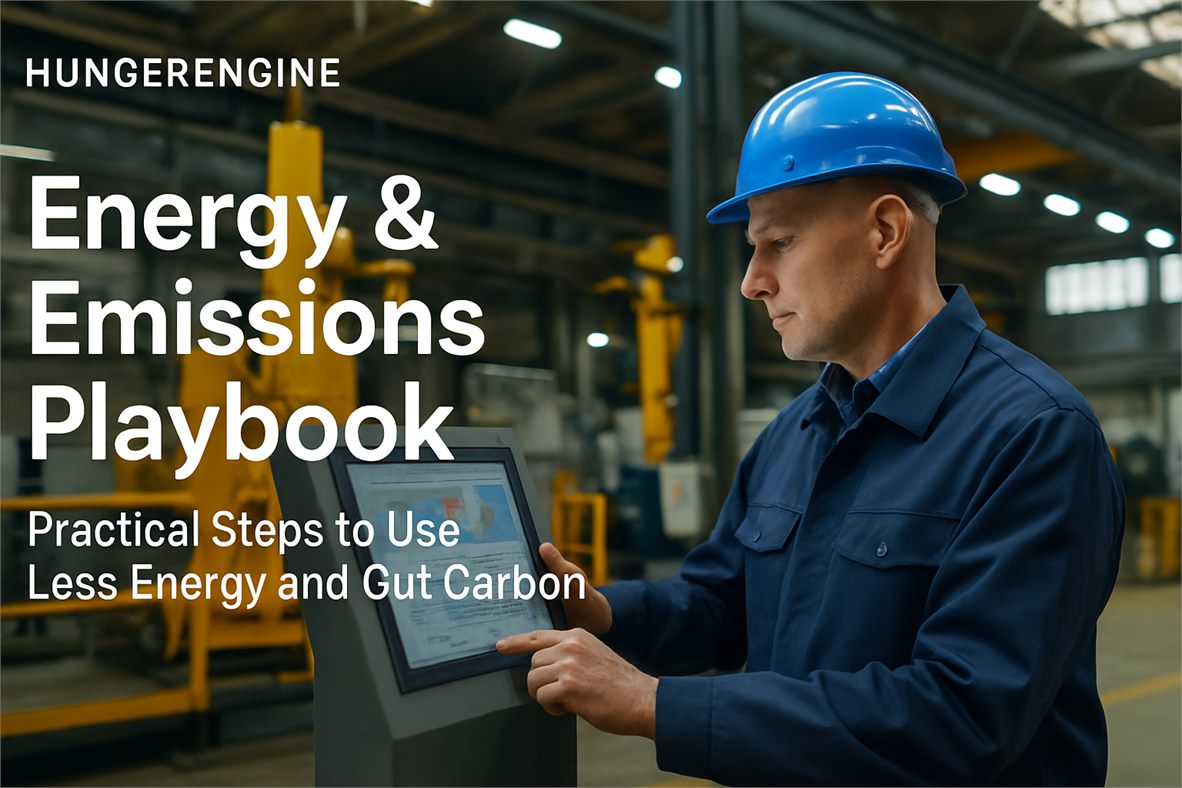
Energy & Emissions Playbook: Practical Steps to Use Less Energy and Cut Carbon
Operations-focused checklists and tactical guidance to reduce energy use and greenhouse gas emissions for facilities, teams, and small businesses.
Energy & Emissions Playbook: Practical Steps to Use Less Energy and Cut Carbon
This playbook delivers field‑tested, operations‑first tactics—checklists, decision aids, and behavioral steps—you can apply today to lower energy use and greenhouse gas emissions without disrupting core work.
What you will understand and be able to do
You will learn how to identify low‑cost operational savings, prioritize actions that fit your daily routines, and turn small changes into reliable reductions in energy use and emissions. The playbook focuses on practical steps you can implement, measure, and iterate: scheduling, simple equipment tuning, setpoint and schedule changes, preventive maintenance, and staff practices that remove waste from operations.
Who benefits
Facility managers, operations teams, sustainability leads, small business owners, building supervisors, service providers, and frontline staff will find directly applicable tactics here. Examples and checklists are framed for a range of settings—from a local restaurant or school to a factory floor, healthcare facility, or property management portfolio—so teams of different sizes can adapt the same core ideas to their context.
How to use this playbook
Start by doing a short site walkthrough and a 72‑hour energy observation to find the most obvious waste (lighting left on, unnecessary HVAC runtime, idling motors). Use the included operational checklist to capture quick fixes, then prioritize actions that require no capital or small, justifiable investments. Combine behavioral nudges (shift schedules, clear owner responsibilities) with simple tuning (thermostat setbacks, lighting zoning, equipment sequencing) and measure changes against a short baseline period.
Practical examples
- Manufacturing plant: reschedule non‑critical heat‑intensive processes to off‑peak hours, isolate and balance compressed air leaks, and set clear shutdown procedures for idle equipment.
- Restaurant or commercial kitchen: standardize refrigeration setpoints and night covers, time hood and HVAC ventilation to kitchen demand, and train staff on closing checklists that remove plug loads.
- Small office or school: deploy vacancy schedules, switch to LED task lighting where sensible, and apply thermostat setbacks for unoccupied periods.
- Healthcare or lab facility: optimize HVAC zoning and fresh‑air volumes for occupied zones, prioritize preventive maintenance for central plants, and document exceptions where clinical needs require different rules.
- Skilled trades and service companies: include energy checks in routine service visits—seal ducts, tune burners, verify motor V‑belt tension—and capture improvements in job reports so savings compound over time.
What to watch out for
Avoid starting with high‑level targets before you understand operational realities. Targets without operational tactics often lead to expensive retrofits or disjointed vendor proposals that miss low‑cost savings. This playbook emphasizes measurable, operational actions first—then shows how to scale and sequence capital projects when they are truly needed.
Next steps and how this connects to the Sustainability & Environmental Stewardship hub
Use this playbook as an operational anchor in your broader sustainability work: pair its checklists with periodic assessments, staff huddles to review progress, and simple dashboards or logs that track energy before and after changes. Over time, the documented operational improvements become the organization’s living memory—informing future projects, audits, and training across the Sustainability & Environmental Stewardship domain.
- Run a 72‑hour observation and complete the operational checklist.
- Hold a short team huddle to assign owners for quick wins and 30‑day actions.
- Document baseline energy use and track changes weekly to learn and adapt.
Make useful resources part of something bigger.
The Hunger Engine is moving toward living domains, toolkits, and collections that people and organizations can explore, acquire, tailor, extend, and improve. A useful resource can become part of a personal collection, team toolbox, site-specific domain, or shared enterprise capability.
Start with what you're hungry to improve. As your needs grow, collections can bring together knowledge, audits, forms, dashboards, data, AI, integrations, and other capabilities without requiring you to start from scratch.